
Struggling with yarn quality issues? These defects can ruin fabrics and hurt your profits. It is frustrating to find flaws after all the hard work.
Yarn defects mostly come from three key areas. Problems with raw materials, issues in the spinning process, and mistakes with equipment or operation. Focusing on these areas will improve your yarn quality.

When I first started my factory, a client came to me with a big problem. Their fabrics had streaks and weak spots. After looking closely, we found the issue was not in their weaving but in the yarn they were using. It was full of small defects. This experience taught me how critical it is to control every step of yarn production. Small mistakes early on can lead to big problems later. Understanding the source of these defects is the first step to creating strong, reliable thread. Let's look at what causes these problems and how you can avoid them.
What Are the Causes of Yarn Defects?
Are you seeing frequent breaks and inconsistencies in your yarn? These frustrating defects often trace back to specific causes, damaging your production efficiency and final product quality.
The main causes are poor-quality raw fibers, incorrect settings in the spinning process, and worn-out or poorly maintained machines. Human error by operators also plays a significant role in creating these defects.
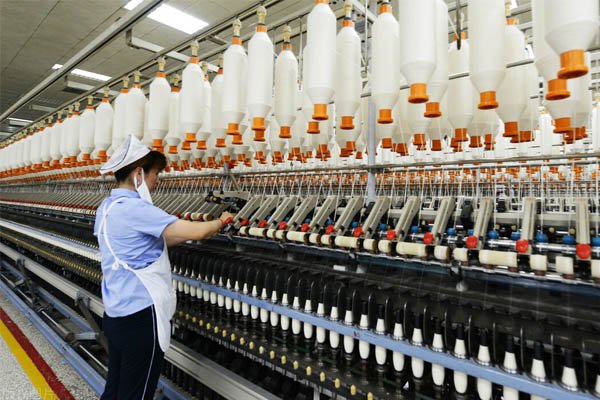
Based on my years of experience, these causes can be broken down into specific areas. If you can control these three pillars of production, you will see a big improvement in your yarn quality. I once had a batch that kept showing thin spots. We checked everything and finally found that a few spinning machines had the wrong drafting settings after a shift change. It was a simple mistake, but it affected thousands of meters of yarn. Let's explore these causes more deeply.
Raw Material Problems
The quality of your yarn starts with the quality of your raw fibers. If you start with bad materials, you cannot expect a good result. Common issues include using fibers that are too short, weak, or dirty. The presence of foreign matter like leaves or plastic can also cause major defects later on.
Spinning Process Issues
The spinning process transforms raw fibers into yarn. Each step must be precise. Incorrect settings or procedures can introduce flaws. For example, if the drafting rollers are set incorrectly, you can get thick and thin spots (slubs). If there isn't enough twist, the yarn will be weak and hairy.
Equipment and Operation Mistakes
Your machines and the people who run them are the final pieces of the puzzle. Worn-out parts like rollers or guides can damage the yarn as it's being made. Incorrect machine settings are a common source of trouble. Also, even with perfect machines, an operator who is not properly trained can make mistakes that lead to defects, such as improper piecing of a broken thread.
Here is a simple table to show how these causes lead to specific defects:
| Cause | Potential Defects | How to Prevent |
|---|---|---|
| Poor Raw Material | Slubs, Weak Spots, Neps | Source high-quality, clean fibers. Test materials before use. |
| Incorrect Process | Thin/Thick Places, Hairiness | Calibrate spinning parameters. Regularly check drafts and twist levels. |
| Faulty Equipment/Operation | Yarn Breaks, Abrasion, Contamination | Implement a strict maintenance schedule. Provide thorough operator training. |
What Factors Influence the Quality of Yarn?
Are you trying to produce consistently high-quality yarn? Many factors can impact your final product, making it difficult to maintain your standards and keep your customers happy.
The most important factors influencing yarn quality are the characteristics of the raw fiber, the precision and condition of your spinning machinery, the skill of your operators, and the factory's environment.
Controlling yarn quality is a balancing act. You have to manage many different factors at the same time. Think of it like baking a cake. You need the right ingredients (fibers), the right oven (machinery), the right recipe (process), and a good baker (operator). If any one of these is wrong, the final cake will not be good. I've learned that overlooking even small details, like the humidity in the spinning room, can have a surprisingly large impact on the yarn's strength and smoothness.
The Role of Fiber Characteristics
The raw material is the foundation of your yarn. Its properties determine the final yarn's characteristics.
- Fiber Length: Longer fibers generally produce stronger and smoother yarn. Short fibers can lead to more hairiness and weak spots.
- Fiber Strength: Stronger fibers create stronger yarn. This is critical for applications where the yarn will be under a lot of tension, like in industrial sewing.
- Fineness (Micronaire): This measures the fiber's thickness. A consistent fineness is important for creating even yarn without thick or thin spots.
- Cleanliness: The amount of trash, dust, and non-fiber material in the raw cotton or synthetic material directly impacts yarn purity and can cause defects.
The Impact of Machinery and Process Control
Modern machinery offers incredible precision, but it must be managed correctly.
- Machine Maintenance: Worn-out parts, like rings, travelers, and rollers, can abrade the yarn or cause it to break. A regular maintenance schedule is not optional; it is essential.
- Process Settings: Every setting, from the carding machine to the winder, matters. The drafting ratios, twist per inch (TPI), and winding tension must be carefully calibrated for the specific type of yarn you are producing.
- Automation and Monitoring: Modern systems can monitor for defects in real-time. Using tools like yarn clearers helps to remove faults automatically, which greatly improves the quality of the final package.
Human and Environmental Factors
Never underestimate the human and environmental elements in your factory.
- Operator Skill: A skilled operator knows how to piece up broken ends correctly, spot potential problems early, and handle the machinery with care. Continuous training is a great investment.
- Factory Climate: The temperature and humidity in the spinning mill are very important. Proper humidity helps to control static electricity and makes fibers more flexible, reducing breaks and hairiness. I always tell my team that controlling the air is part of controlling the quality.
Here is a summary of these influencing factors:
| Factor | Key Elements | Impact on Quality |
|---|---|---|
| Fiber | Length, Strength, Fineness, Cleanliness | Determines the yarn's core strength, evenness, and appearance. |
| Machinery | Maintenance, Settings, Automation | Affects defect rates, consistency, and production efficiency. |
| People | Skill, Training, Diligence | Reduces errors, improves machine handling, and ensures process compliance. |
| Environment | Temperature, Humidity | Controls fiber behavior, reduces static, and minimizes breaks. |
Conclusion
In short, creating quality yarn means controlling your materials, mastering your processes, and maintaining your machines and staff. Attention to these areas prevents defects and ensures a superior final product.
