
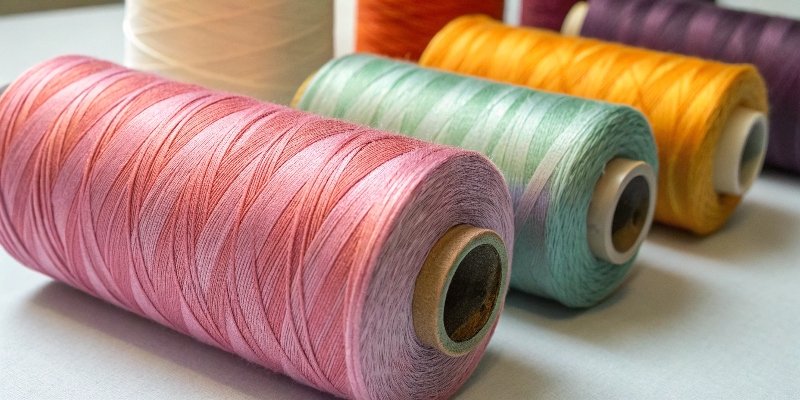
Uneven dyeing results wasting your time and money? This common frustration often points to a single, overlooked factor: the winding density1 of your thread package.
Package winding density directly impacts dye liquor flow2. If it's too loose (low density), dye channels through, causing light spots. If it's too tight (high density), dye can't penetrate evenly, leading to dark or undyed areas. Controlling density is key for consistent color.
In my early days working on the factory floor, I saw entire batches of beautiful yarn ruined by something we couldn't easily see: the tightness of the yarn on the bobbin. It's a lesson that has stuck with me and one that I stress at my own company, Honghui Textile. Getting the color right isn't just about the dye chemicals; it's also about physics. The way we prepare the yarn package is just as critical as the dyeing process3 itself. Let's explore why this simple factor has such a huge impact on your final product quality and how you can master it for perfect results every time.
What Exactly Is Sewing Thread Package Winding Density?
Seeing terms like "winding density" and not sure what they mean? This technical jargon can be confusing, but ignoring it costs you in dyeing quality and efficiency.
Winding density is how tightly yarn is wound onto a package, like a cone or bobbin. It's measured in grams per cubic centimeter (g/cm³). Low density is soft and compressible, while high density is hard and firm.
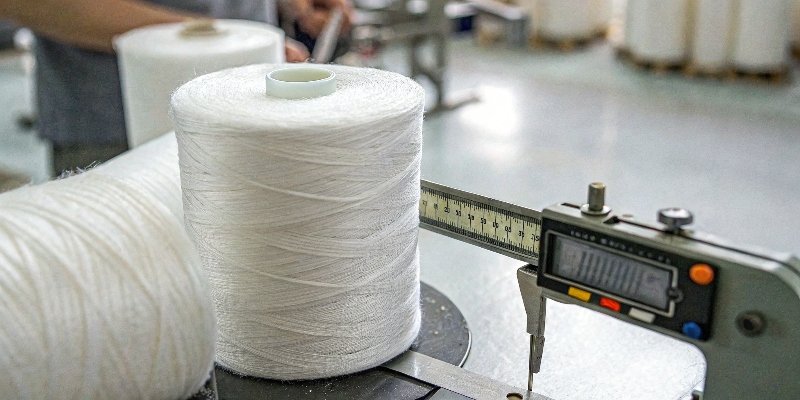
To truly understand this concept, you need to know how we look at it in the factory. It's a simple but crucial measurement that determines the success of the entire dyeing cycle.
How is Density Measured?
At its core, the calculation is straightforward physics. We measure the mass (weight) of the yarn on the package and divide it by the volume the yarn occupies.
Density = Mass of Yarn (g) / Volume of Yarn Package (cm³)
The volume can be a bit tricky to calculate as it depends on the package shape (like a cylinder or a cone), but our machines and software handle this. The final number gives us a precise value for how compact the yarn is.
High vs. Low Density
The terms "high" and "low" are relative, but for package dyeing, we have very specific targets. A package wound for dyeing is often called a "soft package" because it needs to be compressible enough for dye to flow through it.
| Density Type | Typical Range (g/cm³) | Characteristics | Best For |
|---|---|---|---|
| Low Density | 0.35 - 0.45 | Soft, spongy, compressible | Package Dyeing |
| High Density | 0.50 - 0.70+ | Hard, firm, stable | Weaving, Knitting, Sewing |
Density and Package Shape
The goal is not just to hit a target density number, but to achieve uniform density from the inner core of the package to the outer layer. If the inside is wound much tighter than the outside, you will still get dyeing problems. This is why modern precision winders4 are so important; they adjust tension as the package diameter grows to keep the density consistent throughout.
What Dyeing Challenges Come from Winding Density Variations?
Are you facing unpredictable dyeing defects like streaks or spots? These issues can seem random, making it hard to find the root cause and stop wasting product.
Winding density variations cause major dyeing problems. Too low density leads to "channeling5," where dye rushes through easy paths, leaving light streaks. Too high density causes "barriers6," where dye can't penetrate, creating dark or undyed patches.
<sup id=](http://honghuiyarn.com/wp-content/uploads/2025/09/ransehua.jpg) 7 like channeling and color variation" title="Dyeing Challenges from Winding Density" />
7 like channeling and color variation" title="Dyeing Challenges from Winding Density" />
I remember a client who was getting frustratingly inconsistent colors on his polyester thread. We checked his dyes, his water, and his process timing. Everything seemed perfect. Finally, I asked to see his winding department. We found that the tension on one of his older winding machines was off, creating soft spots in the packages. Once we calibrated that machine, the dyeing problems vanished. It showed us again that the issue is often upstream from the dye vat.
The Problem of Channeling
When a package is too soft or has low-density spots, the dye liquor acts like water—it follows the path of least resistance. Instead of flowing evenly through all the yarn, it carves "channels" through the loose areas. The yarn in these channels gets plenty of dye, but the surrounding, slightly denser areas get starved. This results in light-colored streaks or completely undyed patches, ruining the yarn.
The Barrier Effect
The opposite problem occurs when the package is wound too tightly. The yarn is so compact that it creates a physical barrier. The pressure from the dye pump isn't strong enough to force the liquor into these dense areas. This can lead to what we call "resist spots." Often, the outside of the package will be dark and perfectly colored, but when you unwind it, the yarn from the middle or inner layers is much lighter or even completely white.
Inside-Outside Color Differences
This is one of the most common defects caused by poor density control. During dyeing, the flow of the liquor itself exerts pressure. If a package is a bit too soft, this pressure can compress the inner layers, making them denser during the process. This can result in a package that is darker on the outside and lighter on the inside. An inconsistent winding process is almost always the culprit.
What Are the Physical Causes Behind These Dyeing Issues?
Knowing the what is good, but do you understand the why? Without understanding the physics, you are just guessing at solutions for your dyeing problems.
The physical cause is all about liquid flow dynamics. Dye liquor needs to flow uniformly through the yarn package. Uneven density creates uneven resistance, forcing the dye into some areas and blocking it from others, which directly results in uneven color deposition.
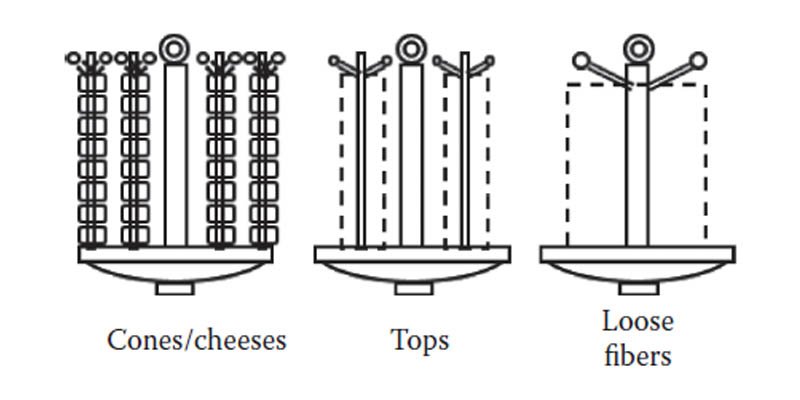
Think of a yarn package as a filter. For a filter to work correctly, it must have a consistent structure. If it has big holes and clogged sections, fluid won't pass through it evenly. Dyeing a yarn package works on the exact same principle.
Pressure Differentials
In package dyeing, pumps force the dye liquor through the yarn, typically alternating between an inside-to-outside flow and an outside-to-inside flow. This creates a pressure difference across the package. If the density is uniform, the resistance to this flow is also uniform, and the dye moves evenly. But if one side is denser than the other, the liquor will preferentially flow through the less dense, lower-resistance side. The high-pressure dye will bypass the high-resistance areas, starving them of color.
The Role of Permeability
Permeability is the scientific term for how easily a fluid can pass through a material.
- Low Density = High Permeability (easy for dye to flow)
- High Density = Low Permeability (hard for dye to flow)
Our goal in winding for dyeing is to create a package with uniform permeability8 throughout. The table below shows how this simple relationship leads to either success or failure.
| Density Level | Permeability | Dye Flow Behavior | Dyeing Result |
|---|---|---|---|
| Too Low | Too High | Uncontrolled, fast flow | Channeling / Light Spots |
| Too High | Too Low | Obstructed, slow flow | Barriers / Undyed Cores |
| Ideal | Uniform | Consistent, even flow | Even Color |
Package Deformation during Dyeing
A final physical factor is what happens inside the high-temperature, high-pressure dye machine. A package that is wound too softly lacks structural integrity. The force of the dye liquor flowing through it can actually squeeze and deform the package, further compacting the yarn in the middle. This increases density mid-process, creating a barrier that wasn't there at the start. This is why starting with the correct, stable density is non-negotiable.
How Can You Optimize Winding Density for Better Dyeing Quality?
Tired of fighting dyeing defects and ready for a solution? Implementing a few key controls can stop these problems before they start, saving you material and stress.
Optimize density by using precision winders with tension controls and density feedback systems. Regularly calibrate machines, train operators, and establish standard density targets for different yarn types. Always test sample packages before running a large batch.
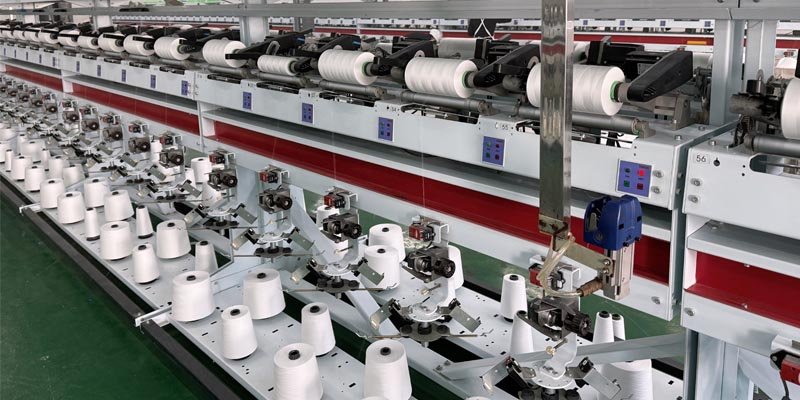
This is an area where I've invested heavily in my own factory. We can have the best yarn and the best dyes in the world, but if the preparation is wrong, the result will be wrong. Getting this right is about combining technology with process discipline.
Precision Winding Technology
The days of relying on an operator's "feel" are over. Modern precision winders are essential for quality. At Honghui Textile, our machines have electronic sensors that constantly monitor yarn tension9 and package diameter. They automatically adjust the winding speed and traverse to ensure that the density is perfectly consistent from the first meter of yarn to the last. This technology is the first line of defense against density-related dyeing defects.
Establishing Standard Operating Procedures (SOPs)
Technology alone is not enough; your team needs clear instructions. We have SOPs for every yarn type we produce. This includes a clear target density value for dyeing. For example, a polyester spun yarn might need a density of 0.38 g/cm³, while a textured nylon might need 0.42 g/cm³. An operator's checklist would look like this:
- Identify the yarn type and lot number.
- Look up the target dyeing density in the SOP manual.
- Set the parameters on the precision winder.
- Produce one test package.
- Check the test package for correct density.
- If correct, proceed with the batch. If not, recalibrate and re-test.
The Importance of Testing
You cannot control what you do not measure. Before dyeing a batch of 500 packages, we test one. This takes only a few minutes. We weigh it and measure its dimensions to calculate the density. We also use a simple tool called a durometer, which measures hardness. By pressing it against the package at several points, we can quickly check for consistency and any hard or soft spots. This simple test has saved us from countless dyeing disasters.
Conclusion
In short, controlling sewing thread package winding density is not a minor detail—it is fundamental to achieving high-quality, even dyeing. By understanding the physics, using the right technology, and sticking to disciplined procedures, you can eliminate many common dyeing defects, saving both time and money.
Understanding winding density is crucial for achieving consistent dyeing results and avoiding defects. ↩
Learn how dye liquor flow dynamics impact the final color of your textile products. ↩
Gain insights into the dyeing process and how to optimize it for consistent results. ↩
Find out how precision winders enhance yarn preparation for better dyeing outcomes. ↩
Discover the causes of channeling and effective strategies to ensure even dye application. ↩
Understanding barriers can help you troubleshoot and improve dye penetration in your fabrics. ↩
Explore common dyeing defects and effective solutions to improve your dyeing quality. ↩
Learn about permeability and its role in achieving uniform dye flow through yarn packages. ↩
Discover the relationship between yarn tension and dyeing quality for better results. ↩
