
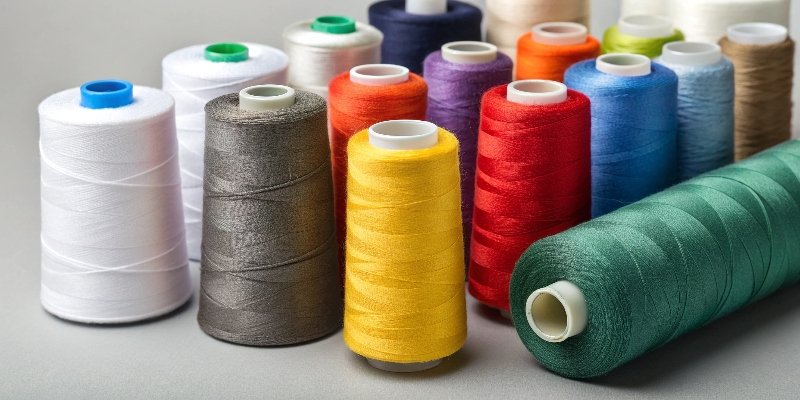
Are you frustrated with seams that pucker or thread that keeps breaking? Using the wrong polyester thread can ruin hours of work, turning a beautiful project into a disappointment.
The key is to match your thread weight to your fabric's weight. For most sewing, a standard spun polyester (Tex 27-30) is perfect. For heavy materials like denim or canvas, you need a stronger, thicker thread like bonded polyester (Tex 45 and up) to create durable seams.
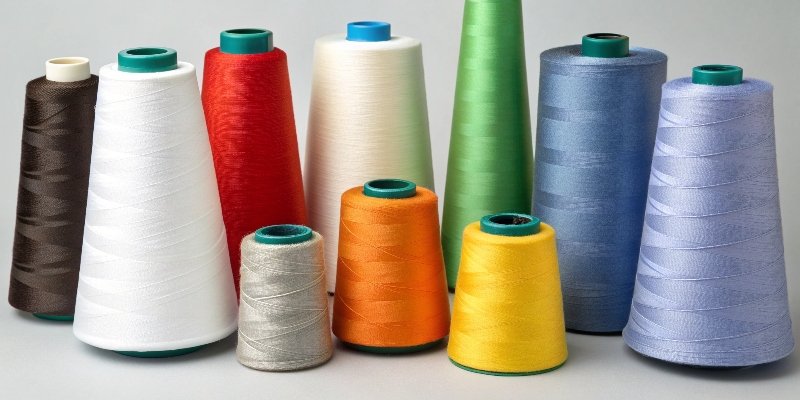
I've seen how the right thread can elevate a project from good to great. It’s about more than just matching a color; it’s about understanding the science behind the stitch. A customer once brought me a beautifully stitched leather bag where the seams were already fraying after a week. He used a standard thread, not a bonded one. A simple switch would have saved his product. I want to share the practical knowledge I've gained from my factory floor to help you sew with confidence and avoid these common mistakes. Let's break down the details so your next project is your best one yet.
How Do You Match Polyester Thread to Your Specific Project?
You've found the perfect fabric for your new project, but now you're faced with a wall of thread. The wrong choice can lead to weak seams on heavy fabric or bulky stitches on delicate cloth.
Simply match the thread type to your fabric. Use spun polyester for light wovens, corespun for knits that need to stretch, and bonded polyester for tough outdoor gear. The goal is for the thread to be slightly stronger than the fabric itself, but not overpowering.
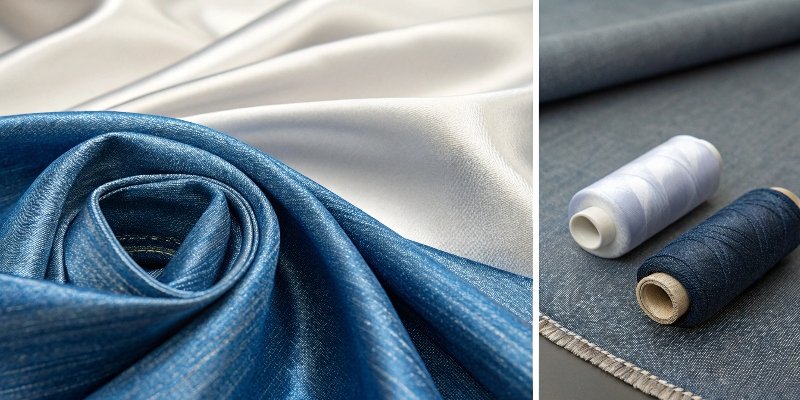
Choosing the right thread is like choosing the right tool for a job. You wouldn't use a sledgehammer to hang a picture frame. The same logic applies here. Proper matching ensures the seam behaves like the fabric, creating a professional and long-lasting result.
Match the Thread Type to Your Fabric
The interaction between thread and fabric is critical.
- Lightweight Wovens & Knits: For fabrics like chiffon, silk, or light cotton lawn, a fine spun polyester thread (around Tex 21-27) is ideal. It’s strong enough to hold a seam but light enough that it won’t pucker or pull the delicate material.
- Medium-Weight Fabrics: This is your everyday category, including quilting cotton, poplin, and linen. An all-purpose spun or corespun polyester (Tex 27-30) is the workhorse here. It offers a great balance of strength and flexibility for both construction and topstitching.
- Heavyweight Fabrics: When you work with denim, canvas, upholstery, or leather, you need strength above all else. A bonded polyester thread (Tex 45-70) is non-negotiable. The bonding coat prevents fraying and allows the thread to glide through tough materials without shredding.
Match the Thread to Your Machine and Process
The way you sew also dictates your thread choice.
- Home Sewing: Most domestic machines run beautifully with all-purpose spun or corespun polyester. They are versatile and reliable for a wide range of projects.
- Serging/Overlocking: Sergers use multiple threads, so you want to avoid creating bulky seams. A standard Tex 27 polyester works for needle threads, but using a slightly finer thread in the loopers can create a flatter, more professional finish.
- Embroidery: For this, you need a thread with high sheen and strength to handle rapid direction changes at high speeds. Polyester filament embroidery thread is perfect. It's vibrant, strong, and gives a beautiful, lustrous finish.
How Do You Make Sense of Thread Sizes and Labels?
Staring at thread labels with terms like Tex, Denier, and Tkt. is confusing. Picking the wrong size by mistake can lead to poor stitch quality, broken needles, and a lot of frustration.
Tex is the most direct system: it's the weight in grams of 1,000 meters of thread. A higher Tex number means a thicker, stronger thread. For general sewing, Tex 27-30 is standard. For heavy-duty projects, look for Tex 45 or higher.
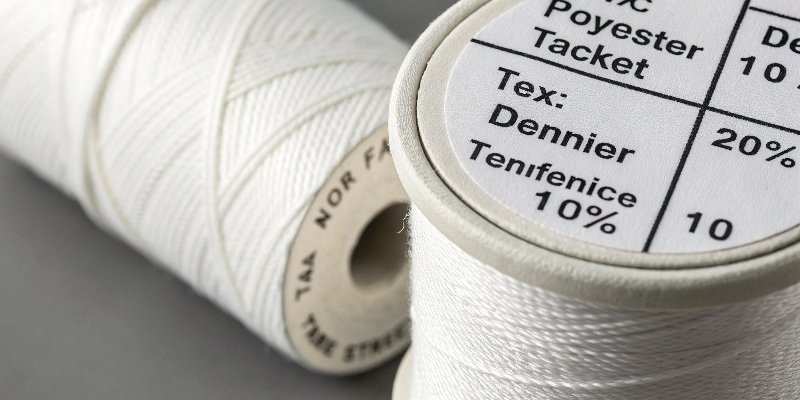
I remember a client who was struggling with a quilting project. Her thread kept breaking. She showed me the spool, which had a high ticket number on it. She thought a high number meant high strength, but with the ticket system, it's the opposite! A higher ticket number means a thinner thread. We switched her to a lower ticket number (higher Tex) thread, and the problem disappeared. Understanding these systems is fundamental.
Understanding the Sizing Systems
Let's clear up the confusion between the most common sizing standards.
- Tex: This is an international standard and my personal favorite for its simplicity. It measures the weight in grams of 1,000 meters of yarn. Higher Tex = Thicker Thread.
- Denier (Den): This system is also a direct measure of weight. It's the weight in grams of 9,000 meters of yarn. It's often used for filament threads like those in embroidery or sportswear. Higher Denier = Thicker Thread.
- Ticket Number (Tkt. or No.): This is an indirect system. It's based on how many hanks of a certain length weigh a certain amount. The key takeaway is that it works in reverse. Higher Ticket No. = Thinner Thread.
Common Conversions and Label Terms
Here is a table to help you relate these sizes to common sewing tasks.
| Thread Use Case | Tex (Approx.) | Ticket No. (Approx.) | Denier (Approx.) |
|---|---|---|---|
| Lingerie, Delicates | 18-21 | 150 | 160-190 |
| General Sewing | 27-30 | 120 | 240-270 |
| Topstitching, Denim | 40-45 | 75 | 360-405 |
| Heavy-Duty, Canvas | 60-70 | 40 | 540-630 |
| Upholstery, Leather | 90+ | 30 | 810+ |
You'll also see other terms on labels:
- Corespun vs. Spun: Spun polyester is made of short fibers twisted together, giving it a matte, cotton-like finish. Corespun has a polyester filament core wrapped in spun fibers, offering the strength of a filament with the sewability and look of spun thread.
- Bonded vs. Soft: 'Bonded' thread is coated with a resin. This makes it stiffer, stronger, and highly resistant to abrasion and fraying. 'Soft' is the untreated, more flexible version.
What Else Matters Besides Thread Size?
You've picked the right size, but your seams are still failing under stress or puckering on stretchy fabrics. It feels like there's a missing piece to the puzzle, and your project's durability is at stake.
Beyond size, consider strength, stretch, and finish. Balance Tex strength with seam bulk. Choose corespun for its stretch on knits. Select a bonded finish for abrasion resistance or a UV-resistant finish for outdoor items to ensure long-term durability.
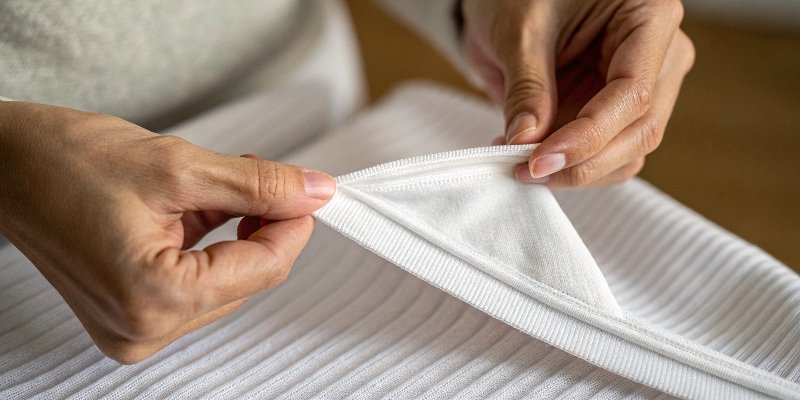
The performance of a thread in the final product is what truly matters. It's not just about getting the thread through the machine; it's about how that thread functions for the life of the garment or item. This is where a deeper understanding of thread properties makes a huge difference in the quality of your work.
Balance Strength with Seam Volume
The strongest thread is not always the best thread. If a thread is too thick and strong for the fabric, it can create a stiff, bulky seam that is uncomfortable and can even damage the fabric over time. The rule I follow is this: the thread should be strong, but the seam should be the weakest part of the construction. In a moment of extreme stress, you want the seam to fail, not for the fabric to rip. A torn seam is an easy fix; a hole in the fabric is not. For dense stitching like a satin stitch, you can often use a slightly thinner thread because the density of the stitches provides the needed strength.
Evaluate Extension and Recovery
This is absolutely critical for sewing with knits or any fabric with spandex. If your thread does not stretch with the fabric, the stitches will pop the first time the garment is worn. This is where corespun polyester shines. It has a high-strength filament core that gives it an excellent durability, but the spun wrapper gives it softness and excellent stretch and recovery. When the fabric stretches, the thread stretches with it and then returns to its original state without causing those ugly, wavy "lettuce-leaf" hems.
Choose the Right Finish for the Conditions
The thread’s finish protects it and ensures it performs correctly in its end-use environment.
- Bonded: The tough, protective coating on bonded polyester is a lifesaver for sewing anything that experiences high friction. Think backpacks, leather shoes, boat sails, and furniture. This finish prevents the thread from fraying or shredding as it passes through tough materials at high speed.
- UV-Resistant: Standard polyester thread will become brittle and weak after prolonged exposure to sunlight. For any item that will live outdoors—patio umbrellas, awnings, outdoor cushions—you must use a polyester thread with a UV-resistant finish. This specialized treatment protects the thread’s integrity, adding years to the life of your product.
How Do You Set Up Your Machine for Perfect Polyester Stitches?
Even with the correct thread, you're getting skipped stitches, tangles, and ugly tension. It’s easy to blame the sewing machine, but a simple setup mistake is often the real problem.
Match your needle size to your thread size; a thicker thread needs a larger needle with a bigger eye. Always test your tension on a scrap of your project fabric first. A balanced stitch has the top and bobbin threads meeting neatly between the fabric layers.
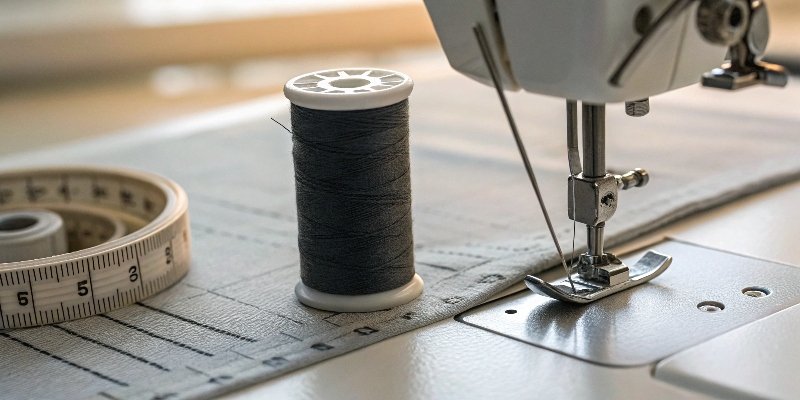
A sewing machine is a system where every part must work together. The thread, needle, and tension settings form a triangle of balance. When I train new operators in my factory, the first thing they learn isn't how to sew fast, but how to set up their machine correctly. A few minutes of setup can save hours of troubleshooting.
Select the Right Needle Size and Point
The needle is the thread's partner. If the needle's eye is too small, it will chafe, shred, and break your thread. A simple test I teach is this: thread the needle, then hold the thread at a 45-degree angle. If the needle slides down the thread easily, you have a good match.
- Needle Points Matter:
- Universal: An all-purpose point for woven fabrics.
- Ballpoint: A rounded tip that pushes aside the fibers of knit fabrics instead of piercing and breaking them. This is essential to prevent runs and holes in knits.
- Microtex (Sharp): A very slim, sharp point perfect for creating straight, clean stitches on delicate fabrics like microfiber or tightly woven poplins.
Adjust Tension for Thread Thickness
Every thread requires a different tension setting. Thicker threads create more friction as they pass through the tension discs and need higher tension to form a balanced stitch. Thinner threads need less. Never assume your machine's default setting is correct.
- Take a scrap of your project fabric.
- Sew a few inches.
- Examine the stitch. If you see loops on the bottom, your top tension is too loose (increase the number). If you see the bobbin thread pulled to the top, your top tension is too tight (decrease the number). Adjust in small increments until the knot between the threads is hidden perfectly in the middle of the fabric layers.
Optimize Your Stitch Length
Thick thread and short stitches are a bad combination. This effectively perforates the fabric, creating a "tear here" line that compromises the strength of the seam. When using a thicker thread (like Tex 45 or higher for topstitching), you must increase your stitch length to 3.0mm, 3.5mm, or even 4.0mm. This gives each powerful stitch the space it needs to form correctly without damaging the fabric.
How Do You Troubleshoot Common Polyester Thread Issues?
You're sewing along, and suddenly your thread is skipping stitches or forming a huge, tangled "bird's nest" underneath your fabric. These problems are infuriating and stop your project in its tracks.
For skipped stitches, start by changing your needle. To prevent shredding, use a high-quality thread and ensure your needle is large enough. "Bird's nests" are almost always caused by improper upper threading or zero top tension.
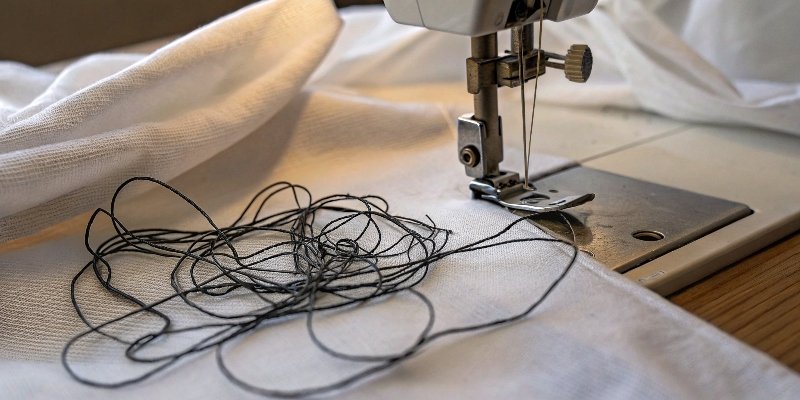
I’ll never forget what a veteran mechanic told me when I first started working in a textile factory: "90% of so-called machine problems are really just needle or threading problems." He was absolutely right. Before you assume your machine is broken, always run through a quick diagnostic checklist. It's the first thing we do on the production floor, and it solves the issue a vast majority of the time.
Quick Fix Troubleshooting Checklist
Work through these common issues methodically. Don't just change one thing; start from the beginning and re-setup your machine.
| Problem | Common Causes | The Solution |
|---|---|---|
| Skipped Stitches | A dull, bent, or incorrect needle is the #1 cause. The machine is threaded incorrectly. | 1. Install a brand new needle. 2. Make sure you are using the right type (e.g., ballpoint for knits). 3. Completely re-thread the top thread and bobbin. |
| Thread Shredding or Breaking | Poor quality thread. The needle eye is too small. Top tension is too tight. | 1. Switch to a higher quality thread. 2. Change to a needle with a larger eye (a larger size number). 3. Reduce your top tension setting. |
| "Bird's Nests" on the Bottom | The top of the machine is not threaded correctly. Most often, the thread is not seated in the tension discs. | 1. Raise the presser foot. This is critical as it opens the tension discs. 2. Completely re-thread the machine from the spool down to the needle. 3. Check tension on a scrap. |
| Loops on Top of Fabric | The top tension is too tight, pulling the bobbin thread all the way through. The bobbin is inserted incorrectly. | 1. Reduce the top tension. 2. Remove and re-insert the bobbin, ensuring it is spinning the correct way and the thread is properly seated in the bobbin case tension spring. |
Conclusion
Choosing the right polyester thread doesn't have to be complicated. By matching your thread to your fabric, understanding the labels, and correctly setting up your machine, you can ensure strong, beautiful results. These fundamentals will elevate your sewing and give you confidence in every stitch you make.
